
Murder Incorporated (2018)
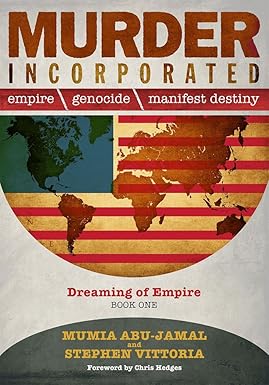
Murder Incorporated (2018)
Murder is rarely personal in the way popular imagination assumes. It is often bureaucratic, procedural, and normalized—a function of institutions rather than a deviation from them. Murder Incorporated examines the mechanisms through which the state, in the name of law and order, enforces violence selectively, predictably, and with impunity.
The book exposes patterns that stretch across history and geography: policing strategies, targeted assassinations, covert operations, and legislative policies that systematically harm marginalized communities. The machinery of control is precise, yet obscured; the hands of authority remain clean in the eyes of public perception while destruction spreads quietly, inexorably.
From confinement, the scope of this violence becomes unmistakable. Murder is not an anomaly—it is embedded in structure. Every act is sanctioned by the logic of efficiency, fear, and deterrence. Communities are mapped as risk zones, individuals as liabilities, and resistance as justification for suppression. Death is treated as consequence, not catastrophe.
Yet documenting this machinery is itself a form of resistance. Writing exposes what official narratives deny, tracing the continuity of harm and revealing the human cost behind abstract statistics. Each observation is testimony; each analysis a refusal to let normalization pass unquestioned.
The work also interrogates complicity. Citizens, institutions, and media often participate indirectly by ignoring patterns, repeating sanitized narratives, or framing victims as culpable. Murder Incorporated forces a confrontation with this collective responsibility. Violence is not only enacted by the few; it is tolerated, reproduced, and justified by the many.
Ultimately, the book insists that accountability is not optional. Understanding the system is the first step toward dismantling it. Awareness alone cannot save lives, but it is the prerequisite for action. To read these pages is to witness, to reckon, and to recognize that murder, when institutionalized, requires moral courage from those who observe.