
Murder Incorporated (2020)
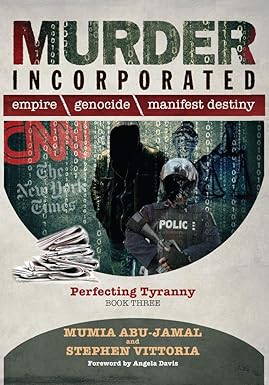
Murder Incorporated (2020)
Empire names itself exceptional while it enacts violence as policy. Murder Incorporated reframes the American narrative not as the unfolding of benevolent ideals, but as an ongoing exercise in sanctioned force. What many histories celebrate as progress, this work examines as conquest and accumulation—actions that rely not on consensus, but on coercion.
The phrase “murder incorporated” serves as metaphor and indictment. It captures how state power functions when lethal force is normalized and bureaucratized rather than exceptionalized. From early colonial seizures of land and labor to covert interventions abroad, death becomes part of the mechanism by which authority is extended and protected. Institutions that proclaim liberty often administer the very violence they profess to restrain.
This volume pushes beyond isolated events to reveal patterns. Patterns of conquest, economic extraction, official propaganda, and systematic inequality emerge as themes woven through centuries of policy and practice. The work interrogates the myth that liberty and democracy are the natural export of American ideals; instead, it names how structures of power systematically subordinate other peoples and nations to strategic interests.
Yet this critique is not an exercise in nihilism. By documenting how systems operate, the authors encourage readers to see history and policy as mutable rather than immutable. Awareness becomes the first step toward accountability. If violence has been institutionalized, then collective reckoning becomes necessary for any transformation that rejects domination in favor of equitable coexistence.
Finally, the work brings the reader face‑to‑face with contradiction: a nation that celebrates its democratic heritage yet sustains hierarchies of power through force. Recognizing these contradictions does not simply challenge narratives—it invites active thought about collective responsibility, historical memory, and the kind of world that might be forged when domination is no longer considered the default template for order.