
Murder Incorporated (2019)
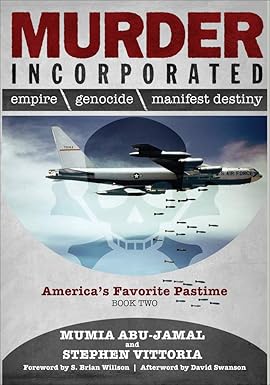
Murder Incorporated (2019)
Violence in America rarely announces itself as violence. It arrives coded—as policy, as procedure, as inevitability. Death Blossoms exposes how state power perfects this disguise, transforming human suffering into an acceptable byproduct of order. The gunshot is loud, but the system that authorized it operates quietly, efficiently, and without visible remorse.
The bloom of death is not sudden; it is cultivated. It grows in neighborhoods saturated with surveillance, in courtrooms where credibility is racialized, in prisons that function less as correction than containment. The state claims neutrality, yet its outcomes are remarkably consistent. Certain bodies absorb the impact. Certain communities are expected to endure.
What emerges from these reflections is a portrait of power unmoored from accountability. Police violence is framed as error rather than structure. Incarceration is described as protection rather than extraction. Language performs the crucial task of laundering brutality—turning killings into “incidents,” cages into “facilities,” and lives into statistics.
From inside confinement, clarity sharpens. Distance from the spectacle allows patterns to surface. The same mechanisms repeat: fear invoked, force deployed, justification retrofitted. Resistance is criminalized, dissent pathologized, survival itself rendered suspicious. The law does not merely respond to disorder; it manufactures the conditions that sustain its own authority.
Yet the writing refuses despair as an endpoint. It insists on memory as a form of resistance. To name the dead, to trace the systems that killed them, to refuse the comfort of forgetting—these acts interrupt the cycle. They expose the lie that violence is accidental or exceptional.
Death Blossoms confronts the reader with an uncomfortable truth: a society cannot police its way to justice. When force becomes the default response to inequality, death is no longer a failure of policy—it is its logical conclusion. The question is not whether violence will occur, but who will be expected to bear it silently.
The page becomes a site of refusal. Against erasure, it asserts witness. Against power, it asserts clarity. Against death as governance, it asserts the radical demand that life be valued not selectively, but universally.