
Faith of Our Fathers (2003)
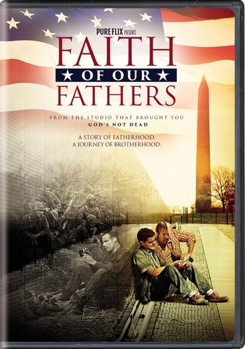
Faith of Our Fathers (2003)
Faith is often mistaken for doctrine, but its truest form is continuity. It is what survives rupture—what is passed hand to hand when institutions fail and promises expire. The faith examined here is not abstract belief, but lived conviction, forged in struggle and sustained across generations denied the luxury of forgetting.
This faith is historical. It remembers chains and laws, marches and prisons, victories partial and fragile. It does not rely on the state for validation. Instead, it grows in spaces where survival itself becomes an argument against erasure. What is inherited is not despair, but persistence—the knowledge that resistance is both necessary and unfinished.
From confinement, ancestry sharpens into presence. The voices of forebears are not distant; they are instructional. They speak through memory, example, and unfinished demands. Faith, in this sense, is fidelity to those who endured without guarantee of reward. It is the refusal to betray their sacrifices by surrendering clarity.
Religion, politics, and culture intersect uneasily here. Faith is stripped of comfort and tested by contradiction. It is asked to stand not as solace, but as responsibility. To believe, under such conditions, is not to escape reality, but to confront it without illusion.
What emerges is a critique of hollow patriotism and inherited myths. The fathers invoked are not symbolic figures of national pride, but real people whose labor, resistance, and suffering built a country that rarely acknowledged them. Their faith was not in inevitability, but in struggle itself.
This inheritance carries weight. It demands action, memory, and refusal. To abandon it would be easier—to accept silence, to trust the system, to forget. But faith, once awakened, resists convenience. It insists on engagement even when outcomes are uncertain.
Faith of Our Fathers affirms that belief grounded in history does not fade under pressure—it clarifies. It binds past to present, ancestor to descendant, voice to voice. In a world that profits from amnesia, such faith is not nostalgic. It is radical.