
All things Censored (1998)
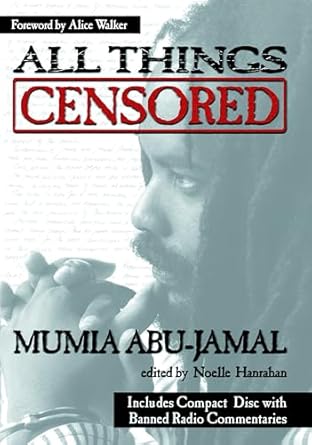
All things Censored (1998)
Censorship rarely declares itself. It does not arrive wearing the badge of repression; it comes dressed as professionalism, balance, objectivity. What is silenced is not always banned—it is filtered, marginalized, edited down until it loses force. In this way, power maintains the illusion of free speech while quietly narrowing the range of acceptable truth.
Mainstream media operates less as a mirror than a gatekeeper. Stories are not merely reported; they are shaped, framed, and prioritized according to interests that remain largely invisible to the audience. Voices from the margins are permitted only when they confirm existing narratives. Dissent that challenges structural power is softened, isolated, or ignored altogether.
From the vantage point of incarceration, the mechanics of censorship become unmistakable. When access to communication is restricted, when words are monitored, delayed, or suppressed, the fiction of a free press collapses. The state’s discomfort with certain voices reveals which truths are most threatening. Silence, in this context, is not absence—it is enforcement.
What is censored most aggressively is not opinion, but connection. The linking of police violence to policy. The linking of poverty to profit. The linking of incarceration to history. Fragmentation serves power. When each event is treated as isolated, the system that produces them remains untouched.
Writing under censorship exposes the paradox of control: the more forcefully a voice is suppressed, the clearer its importance becomes. The act of speaking—persistently, coherently, without permission—undermines the authority that claims to regulate truth. Words become contraband not because they are false, but because they are precise.
The danger of censorship lies not only in what is hidden, but in what replaces it. Manufactured consensus, curated outrage, and endless distraction fill the vacuum. The public is encouraged to react rather than reflect, to consume information without context, to mistake access for understanding.
All Things Censored insists that freedom of speech is meaningless without freedom to be heard. It challenges the reader to question not only what they are told, but what they are never shown. In doing so, it transforms the page into a site of resistance—where clarity survives despite confinement, and truth persists despite attempts to bury it.