
Live from Death Row (1995)
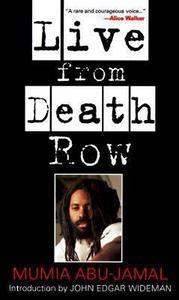
Live from Death Row (1995)
Death row exists to erase complexity. It reduces a life to a verdict, a date, a number on a tier. Yet within that imposed stillness, thought refuses to comply. The mind does not submit to the sentence, even when the body is confined. Reflection sharpens under pressure. Memory becomes resistance. To think clearly in a place designed for psychological collapse is itself an act of defiance.
The machinery of capital punishment depends on abstraction. Legal language drains blood from consequence. Terms like procedure, appeal, and closure obscure the human cost of waiting to die at the state’s discretion. Years pass not in rehabilitation or reckoning, but in limbo—where existence is acknowledged only insofar as it can be terminated. This prolonged uncertainty is not incidental; it is punishment layered atop punishment.
From inside the cell, the contradictions of American justice become unmistakable. The system proclaims fairness while operating through inequality—of race, class, representation, and credibility. Truth competes with authority, and authority nearly always wins. Error is treated as rare, even as patterns repeat. Innocence becomes a technicality rather than a moral absolute.
Writing from death row reclaims the right to narrate one’s own life. It resists the state’s attempt to define a person solely by accusation and outcome. The condemned speaks not as a symbol, but as a witness—observing how power moves, how language is weaponized, how silence is enforced. The voice that emerges is not asking for absolution; it is demanding recognition.
What unsettles readers is not rage, but coherence. Not spectacle, but detail. The mundane realities—the sounds of the tier, the routines of confinement, the slow erosion of hope—expose a violence more chilling than execution itself. This is violence administered calmly, repeatedly, and with public consent.
To engage with death row testimony is to confront complicity. The distance between “the condemned” and “the public” collapses when one recognizes that executions occur not in secrecy, but by mandate. The question ceases to be whether the prisoner deserves death, and becomes whether a society deserves the power to administer it.
The enduring force of this work lies in its refusal to vanish. Against isolation, it insists on connection. Against erasure, it insists on memory. Against death as policy, it insists on life as presence—thinking, speaking, and indicting until the very end.